Chinese takeover rumors now swirl around HTC
An extensive Bloomberg article published on late Wednesday afternoon examined the likelihood of HTC getting bought by ZTE, Huawei or Lenovo. According to recent speculation, Lenovo is now apparently expected to gobble up BlackBerry, Nokia and HTC, though perhaps not in that order. HTC’s market cap has shrunk by 88% from its peak and the company is now valued at less than half of its annual sales, so it definitely is a lot cheaper than it used to be. The problem with the takeover scenario is that if the prospective buyers believe that HTC will be even cheaper in a couple of months, they will be tempted to wait for that deeper bargain. In the meanwhile, HTC’s global market share
Showing posts with label china. Show all posts
Showing posts with label china. Show all posts
2013-08-22
Chinese takeover rumors now swirl around HTC

2013-05-07
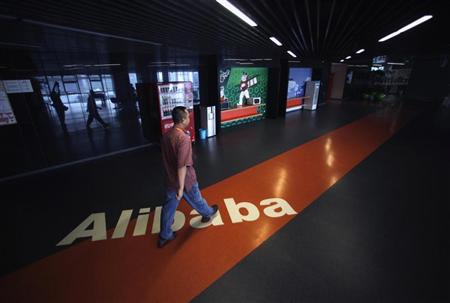
SHANGHAI (Reuters) - China's Alibaba Group Holding Ltd posted a 171.1 percent jump in net profitin the fourth quarter as its revenue rose 84 percent, according to a regulatory filing by major shareholder Yahoo Inc.
For the quarter ending December 2012, net income attributable to Alibaba Group was $642.2 million while its revenue for the period was $1.84 billion, the filing said.
Yahoo, which owns about 24 percent of Alibaba, reported the privately held online shopping giant's results as part of a document filed to the U.S. Securities and Exchange Commission.
Industry watchers widely expect Alibaba to seek an initial public offering as early as this year and some say the company could fetch a valuation as high as Facebook Inc's $100 billion.
Late last month, Alibaba bought an 18 percent stake in Sina Corp's popular microblogging platform, Weibo, for $586 million.
For Alibaba's financial year ending September 30, the company reported a 78 percent rise in revenue to $4.1 billion while net profit attributable to the company rose 80.8 percent to $484.5 million. Alibaba's October-to-December period was previously the first quarter but that was recently changed.
Alibaba is China's largest e-commerce company offering platforms where millions of Chinese shop for everything from kitchen appliances to clothes.
2013-04-29
Yahoo! decides toclose its Chinese mail service
Yahoo!has decided its Chinese customers don't need their emailaccounts any more,and is closing the service in the country.
A statement from Yahoo!Mail tells users thatthey willhave four months,until 19August, to save their emails andswitch to another provider. Thecompany suggests moving to AliCloud -- if users do so,anymail sent to the old account address will still be received in the newAliCloud inbox up until the end of 2014.
AliCloud is provided byAlibaba,the giant web company that runsmany of China's largest ecommerce sites, including eBay-like Taobao(the tenth-most-viewed site in the world according to Alexa ) andthe payment platform Alipay, which had more than 700 million registered users as of September 2012(far surpassing the 128 million users ofPaypal ).
Yahoo!Mailhas been available in China for more than ten years, but Alibaba and Yahoo!struck astrategic partnership deal inOctober 2005 that saw the Chinese firm take responsibilityforrunning Yahoo!'s key Chinese web products. Yahoo! paid Alibaba $1billion (£656million), andin return gained a 40 percent share ofAlibabastock.
Despite having soldsome of that ,its remaining 24 percent of stock is ahighly-valuable asset -- Alibaba handled 1.1 trillion yuan of sales in 2012, more than eBayandAmazon combined. The companyis expected to undergo an IPO laterthis year, with an expected valuation somewhere between £36 billionto £78 billion.
Under new CEO MarissaMayer,Yahoo! has shedmany of itsservices in a bidto find amore content-focused business strategy .The company announced last week six more of these to be shuttered bythe end of April2013--Upcoming, Yahoo!Deals, Yahoo!SMS Alerts, Yahoo!Kids, Yahoo!Mailand Messenger feature phone apps andolder versions of its Yahoo! Mail app.
However,Yahoo!'s £20 million acquisition of Summly (and the hiring of itscreator, Nick D'Aloisio) last month shows the company isn'tsettling to just cut off redundant limbs, and is actively shiftingits focus.
The closure of Yahoo! Mailin China willleave Yahoo! with itshome web portalas its only presence in the most populous countryin the world. While Yahoo! Mail had reportedly had more than 200 million Chinese customers in 2009 ,its popularity has rapidly waned to the extent it is now only thesixth-most-populer emailservice in China serving only two percentof Chinese emailusers.
Domesticemailproviders,like Alibaba's AliCloud, are vastlymore popular,though millions of customers are still likely to beaffected by Yahoo!Mail's closure.
2013-02-20
Apple supplier Foxconn freezes hiring at largest plant
- Reuters/Reuters - A man walks past a logo of a Foxconn factory in Wuhan, Hubei province, August 31, 2012. REUTERS/Stringer
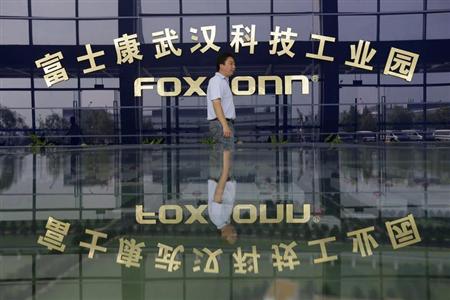
TAIPEI/NEW YORK (Reuters) - Apple Inc's manufacturing partner Foxconn Technology Group has frozen hiring at a Shenzhen plant that makes gadgets including the iPhone 5 and put the brakes on recruiting for other factories across China, but said the move was not linked to any single client.
Foxconn, which runs a network of factories across the world's No. 2 economy that make products for tech companies from Hewlett Packard to Dell, sought to pour cold water on a Financial Times report that it had imposed a hiring freeze while it slows production of Apple's latest smartphone.
"Due to an unprecedented rate of return of employees following the Chinese New Year holiday compared to years past, our company has decided to temporarily slow down our recruitment process," the company said in a statement.
"This action is not related to any single customer and any speculation to the contrary is false and inaccurate."
Like other Chinese contract manufacturers, Foxconn relies on a large number of migrant laborers from across the country, who journey home for the most important holiday of the year. Many do not make it back to work, but Foxconn spokesman Louis Woo said this year they saw as many as 97 percent of employees return.
Apple sold a less-than-expected 47.8 million iPhones in the 2012 holiday quarter, fanning fears that its dominance of consumer electronics is on the decline as Samsung Electronics Co and other manufacturers that use Google Inc's Android software gradually gain market share.
The iPhone is Apple's most important product, accounting for half its revenue. The company's shares slipped almost 2 pct on Wednesday to $451, and are down about 34 percent from their September peak above $700, as investors fret about sliding margins and intensifying competition.
IMPLICATIONS FOR APPLE
Apple watchers often take cues from its component suppliers and manufacturing partners. In January, CEO Tim Cook took the unusual step of warning investors that it is difficult to extrapolate from limited "data points".
RBC estimates that just 70 to 80 percent of Chinese workers return to factories it tracks.
"This year we believe the return rates have been closer to 90 percent, which may minimize the need to hire," RBC analyst Amit Daryanani wrote in a Wednesday research note.
"Given the timing of the freeze, it may have more to do with higher return rates of employees versus what was expected by Foxconn and other supply chain companies."
Foxconn's latest statement contradicts another Foxconn spokesman, Liu Kun, who is cited in the newspaper on Wednesday as saying, "Currently, none of the plants in mainland China have hiring plans."
A check on Foxconn's recruitment website on Wednesday showed the company's Taiyuan and Hangzhou plants were hiring. But its factory complex in the southern city of Shenzhen is its single largest production base.
The Shenzhen plant "is not hiring at the moment because workers' return rate after Chinese New Year is very high this year, reaching 97 pct", Woo said.
"We replenish each year depending on the return rate."
Yahoo co-founder Jerry Yang joins Lenovo board as observer
- View Photo
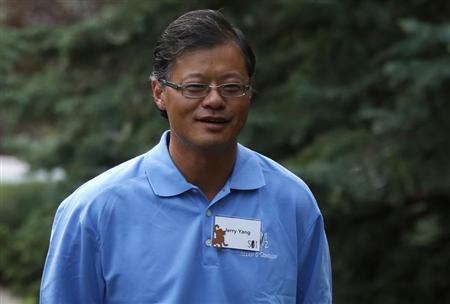 Reuters/Reuters - Co-founder of Yahoo Jerry Yang attends the Allen & Co Media Conference in Sun Valley, Idaho July 13, 2012. REUTERS/Jim Urquhart
HONG KONG (Reuters) - Lenovo Group said Yahoo! co-founder Jerry Yang is to join its board as an observer, as the world's No. 2 maker of PCs expands its mobile business to tap global demand forsmartphones and tablets.
Yang, who co-founded Yahoo! in April 1995 and served as chief executive from June 2007 to January 2009, will not be able to vote or have any of the other rights of a director, Lenovo said on Wednesday.
The Hong Kong-listed company will pay Yang $61,875 per year and offer equity rights with a value of $135,000 in return for attending board meetings and providing views.
Yang, 44, resigned from Yahoo's board last year when he also stepped down from the boards ofAlibaba Group Holding and Yahoo! Japan.
Lenovo, the second-biggest smartphone vendor in China, is stepping up its expansion in the business.
In its October-to-December third quarter, Lenovo shipped 9.4 million phones, including 9 million smartphones, mainly in China where its smartphone business was profitable for the first time.
2013-02-19
Sina Corp posted better-than-expected fourth-quarter revenue and profit amid concerns about the slowing growth of Chinese online advertising.
- Reuters/Reuters - The logo of Sina Corp's Chinese microblog website "Weibo" is seen on a screen in this photo illustration taken in Beijing September 13, 2011. REUTERS/Stringer

(Reuters) - Sina Corp posted better-than-expected fourth-quarter revenue and profit amid concerns about the slowing growth of Chinese online advertising.
Shares in the company, which runs China's largest online portal and the Twitter-like "Weibo" microblogging platform, climbed 6 percent to $56.50 after-hours. They have fallen 13.4 percent since the start of the fourth quarter, underperforming a 2 percent rise in the Nasdaq.
Net profit fell 74 percent in the fourth quarter to $2.4 million, or 3 cents per share, from $9.3 million, or 14 cents per share, a year earlier. But excluding certain items, non-GAAP earnings were $9 million, or 13 cents a share, versus $14 million or 21 cents a share a year earlier.
That surpassed an average forecast for 5 cents a share, according to Thomson Reuters I/B/E/S.
China's online advertising market grew 46.8 percent in 2012, but that was down from 57.6 percent in 2011, according to technology research firm iResearch. The softer advertising market, due to a weaker economic environment, has also hit Sina peers Baidu Inc and Sohu.com Inc.
Analysts say Sina's new "Weibo" advertising products have drawn muted sales.
Sina said it expects first-quarter adjusted net revenue to range between $115 million and $119 million, in line with average predictions on Wall Street for about $117 million. It forecast advertising revenue of $94 million to $96 million this quarter.
Advertising revenue came in at $110.7 million in the fourth quarter, versus a previous company projection for between $110 million and $112 million.
It posted overall fourth-quarter net revenue of $139.1 million, versus an average forecast for $133.9 million according to Thomson Reuters I/B/E/S. Non-advertising revenue decreased 4 percent to $28.5 million.
In the fourth quarter, Sina rolled out two Weibo monetization products aimed at increasing sales on its highly popular social media website.
One of the products gives advertisers a chance at promoting their tweet among users who are not following them, while the other is a platform that links popular microbloggers with advertisers.
Sina's push to monetize Weibo comes as Tencent Holdings' mobile social messaging product, WeChat, is beginning to cut into the popularity of Weibo, analysts said.
2013-02-18
Chinese telecommunications company Huawei said on Monday it had not worked with an institute in Singapore on any projects in the specialist field of an American engineer who died mysteriously last year shortly after leaving the institute.
SINGAPORE (Reuters) - Chinese telecommunications company Huawei said on Monday it had not worked with an institute in Singapore on any projects in the specialist field of an American engineer who died mysteriously last year shortly after leaving the institute.
Britain's Financial Times said on Saturday that Shane Todd had been working on "what was apparently a joint project" between Singapore's Institute of Microelectronics, or IME, and Huawei shortly before he died last June.
His parents have said he was murdered because of his involvement in the project, which they say involved exporting sensitive military technology to China.
IME declined immediate comment.
Singapore police said they were still investigating the death of Todd, 31, and would submit their evidence to a coroner. Singaporean pathologists concluded in an autopsy last June that he died by hanging in his Singapore flat.
"IME approached Huawei on one occasion to cooperate with them in the GaN field, but we decided not to accept, and consequently do not have any cooperation with IME related to GaN," Huawei said in a statement.
Todd's area of expertise was Gallium Nitride (GaN), an advanced semiconductor material which has both commercial and military purposes. It is used in things from blue-ray disc players to military radars.
Huawei said that the development of GaN technology was commonplace across the telecommunications industry.
Reuters reviewed evidence the family presented supporting its theory a few weeks after his death, including emails, other documents and photographs.
Interviews with the family, colleagues and friends revealed conflicting views on Todd's state of mind before his death, the nature of his work and how he died.
Colleagues said that he was increasingly depressed in his last few months, but said that his concerns appeared to centre on a sense of failure about his work, and an ambivalence about returning to the United States.
Researchers in unrelated fields have also questioned how, if his work was so sensitive, he was able to take home computer files from his office. His family retrieved a hard drive which included work files in his flat.
IME is part of a network of research institutes managed by government-run Agency for Science, Technology and Research, or A*Star.
A former A*Star researcher now working in the United States pointed out that IME and other A*Star institutes were not military research organizations.
"AFRAID"
At the heart of the family's theory is that Todd was concerned for his safety because of a project with a Chinese company. They believed, through information from his colleagues and from his computer files, that the company was Huawei.
Reuters can't independently corroborate their views about the role of Huawei or the circumstances of Todd's death.
Huawei is one of the world's largest telecommunication equipment companies, but has been blocked from some projects in Australia and deemed a security risk by the U.S. congress on the grounds that its equipment could be used for spying.
Huawei has routinely denied such accusations and has said it is not linked to the Chinese government.
Todd's parents said in interviews in July that Singapore police and IME had failed to properly investigate his death after his body was found hanging from a door in his Singapore apartment on the evening of June 24, two days after he quit IME.
Singapore police say they have handled the case as they have handled other cases, and their procedures follow high international standards. They said in such cases of unnatural death, "no prior assumptions" were made about the cause.
The parents did not immediately respond to emails requesting comment on the Financial Times report but Todd's mother, Mary, said in a telephone interview with Reuters last July that he had been scared.
"I had been talking to him for months for at least an hour every week and he told us he was afraid of being murdered because of his contacts with the Chinese government," she said.
"He quit his job because of it."
Huawei declined to say whether they had been working on other projects with IME. Colleagues said shortly after Todd's death that he had told them at one point he had been working on a project with Huawei but that it was not sensitive or high-level in nature.
One described it as carrying out "measurement test reports" of semiconductors.
The Financial Times said that Todd had been involved in proposing a joint project with Huawei. While it did not say whether the project was approved, it quoted his parents as saying that subsequently he complained to them of being asked to do things with a Chinese company he did not identify that made him uncomfortable.
2013-01-24
Chinese Lenkovo may buy RIM (blackberrry)
A senior Lenovo executive said on Thursday that the Chinese computer maker may consider Research in Motion as a takeover target, sending the Blackberry maker's shares up 2 percent just a week before it launches a make-or-break line of redesigned smartphones.
But Levovo, which vaulted into the personal computer market with its 2005 purchase of IBM's PC division, would face formidable hurdles if it tried to buy a company that Canadian Prime Minister Stephen Harper once described as a national "crown jewel." The Chinese company would also encounter tough regulatory scrutiny in Washington, cybersecurity experts say.
Lenovo, on track to become the world's largest PC maker, has held talks with RIM and its bankers about various combinations or strategic ventures, its chief financial officer, Wong Wai Ming, said on Thursday.
"We are looking at all opportunities - RIM and many others," Wong told Bloomberg in an interview at the World Economic Forum's annual meeting in Davos, Switzerland. "We'll have no hesitation if the right opportunity comes along."
A spokesman for Lenovo said Wong was asked about RIM by the Bloomberg journalist and that Wong was speaking broadly about Lenovo's M&A strategy.
CRUCIAL JUNCTURE
RIM, once a pioneer in the smartphone industry, has struggled in recent years as its aging line-up of devices have ceded market share to Apple Inc's iPhone and devices based on Google Inc's Android operating system.
RIM hopes its new touch-screen and keyboard devices, powered by its new BlackBerry 10 operating system, will help it claw back some of the lost ground. Optimism surrounding the launch has powered the stock higher in recent weeks.
Last May the Waterloo, Ontario-based company announced a far-reaching strategic review under which it was expected to examine all options, from software licensing deals to an outright sale of the company.
Earlier this week, RIM shares surged to a 13-month high after Chief Executive Thorsten Heins said RIM might consider strategic alliances with other companies after next week's BlackBerry 10 launch.
In an interview with a German newspaper on Monday, Heins said RIM's ongoing strategic review could lead to the sale of its handset business or the licensing of its software to rival smartphone companies.
Even so, analysts expressed skepticism about a Lenovo bid.
"Anybody who's serious about buying a company doesn't go talking it up. ... It sounds to me like a comment made more for publicity's sake than a serious approach for RIM," said Charter Equity analyst Ed Snyder. "It is a very long shot at the best.'
NET BENEFIT TEST
Any bid for RIM would face a rigorous review by the Ottawa to determine whether the deal would bring a "net benefit" to Canada. The Investment Canada Act gives the government the authority to kill deals that could harm Canadian interests or threaten the country's national security.
In response to the comments by Heins, Canada's Industry Minister Christian Paradis told Reuters earlier this week that Canada may even go to the extent of reviewing a sale of RIM's handset business if such a deal was proposed.
"Research in Motion has made an important contribution to information and communications technology in Canada, a sector that is so important to the Canadian economy. We hope they continue to do so well into the future," Paradis said in an emailed response to the Lenovo comments on Thursday.
Cybersecurity experts said Lenovo would likely go up against tough U.S. government scrutiny as well since the Defense Department and other agencies rely on the Blackberry, which is considered more secure than other smartphones.
"A potential acquisition of RIM by Lenovo would raise a number of important security issues," said Michael Wessel, a Commissioner on the U.S.-China Economic and Security Review Commission, appointed by Congress.
"Government employees are one of the largest users of RIM's BlackBerry products and the security of their communications has to be of paramount concern," said Wessel, adding that he was speaking on behalf of himself and not the Commission.
After the comments from Lenovo, a RIM spokesman said the company had nothing new to report on its strategic review.
RIM shares closed 2.2 percent higher at $17.74 on Thursday the Nasdaq. The Toronto-listed shares closed 2.9 percent higher at C$17.80. RIM is a volatile stock, and moves of 3 percent and more are not uncommon.
Its shares are down almost 90 percent from an all-time high of over $148 in 2008, but the stock has rallied in the last four months as the launch of the BlackBerry 10 devices nears. The company's shares have nearly tripled in value since dipping as low as $6.22 in late September.
(Reporting by Euan Rocha in Toronto, Diane Bartz in Washington, Randall Palmer in Ottawa and Sinead Carew in New York; Editing by Frank McGurty
2013-01-15
Alibaba's Jack Ma to stand down as CEO, move to chairman role
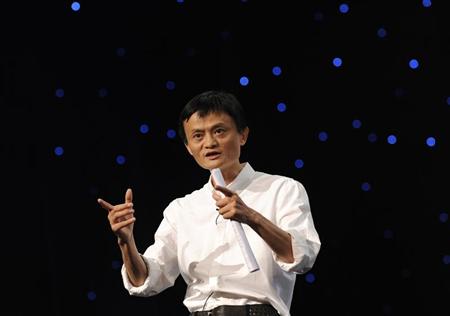
One of China's best known corporate leaders, billionaire Jack Ma, will step down as CEO of Alibaba Group, the e-commerce empire he founded to tap the nation's enormous online shopping potential, passing the reins to "a younger, better equipped" generation.
Ma, a former tour guide and English teacher and self-styled "China's Forrest Gump", said he would name a successor by May 10, when he switches to the role of executive chairman. He said most of Alibaba's leaders "born in the 1960s" would also pass their leadership responsibilities to younger colleagues.
"As a founder CEO, stepping down ... is a difficult decision. It's not because I wanted to take things easy (though the job of Alibaba CEO is no easy task), it's because I see that Alibaba's young people have better, more brilliant, dreams than mine, and they are more capable of building a future that belongs to them," Ma wrote in an e-mail to employees. Reuters obtained the letter on Tuesday from a source close to Alibaba.
The shift is a significant one for Alibaba and follows moves announced last week to chop the group into more than two dozen smaller divisions — to give managers more flexibility. China's big Internet firms such as Baidu Inc and Tencent Holdings are under pressure from startups, and have restructured.
It also comes after a transformative deal Alibaba struck last year to buy back about half the stake in itself held by Yahoo Inc. Alibaba had long sought to buy back the shares to regain control over its own corporate destiny.
Yahoo paid around $1 billion for a 40 percent stake in Alibaba in 2005, but ties were strained and the U.S. group's shareholders last year agitated to unlock the value of Asian assets such as Alibaba.
In an interview with The New York Times, 48-year-old Ma acknowledged he was feeling the strain. "When I was 35, I was so energetic and fresh-thinking. I had nothing to worry about," he said, adding he would focus in his new role on broad strategic issues, corporate development and social responsibility.
"I will still be very active," he said. "It is impossible for me to retire."
Alibaba Group includes Alibaba.com, an online market for small businesses; Taobao, a consumer shopping site; and Alipay, an online payment platform.
The value of deals on Taobao Marketplace and Taobao Mall, China's largest e-commerce platforms, topped 1 trillion yuan ($161 billion) -- around 2 percent of China's GDP -- in January-November, reflecting the boom in a sector where 16 percent of China's 1.34 billion population shops online.
Alibaba's various online marketplaces boast at least 85 million registered users worldwide, trading in everything from imported almonds and precious jade to motorcycles and soft toys.
"The biggest challenge a new CEO faces is making sure the new business units can effectively coordinate among themselves," said Yang Xiao, a Beijing-based analyst with research firm Analysys International. "As they are supposed to be able to work independently, it remains to be seen how effective and authoritative the new CEO can be."
SMALL BUSINESS CHAMPION
Ma, reckoned to be worth $3.4 billion by Forbes late last year, built his e-commerce empire from scratch and has steered it through numerous bumps. Alibaba Group's likely Hong Kong listing is among the big IPOs bankers are preparing for late this year or early next year.
Ma's move is unlikely to affect listing plans, but may have an impact on valuations, industry sources said.
"Jack Ma may not be running the day-to-day activities, although he will still have an influence in where the company should be headed," Frederick Wong, executive director of Avant Capital Management (Hong Kong) Ltd, a hedge fund that invests in tech companies. "However, valuations for the IPO could be lower than previous expectations as it will depend on how effective the new CEO is in executing certain decisions."
Since its founding in 1999, Alibaba has grown into an enterprise spanning business-to-consumer (B2C) and consumer-to-consumer (C2C) trade, logistics, search and e-payment. Ma has more recently been looking to improve its platform rather than just boost the number of subscribers, a shift that's likely to see growth taper off and medium-term profitability dented.
Ma, lean and down-to-earth, founded the group on the principle of championing small businesses, the bedrock of China's economy, in the battle against industry giants.
"My inspiration came from the American movie Forrest Gump," he told an American audience in 2009. "Forrest Gump is not a smart guy, but he is focused. He's not talented, but he is very, very hard working, and he's very simple and opportunistic."
China's booming online market has proved hugely lucrative for Ma. Taobao, a late entrant to the C2C market, beat off eBay Inc in China in the late-2000s by offering free listing services for its sellers.
"EBay may be a shark in the ocean, but I'm a crocodile in the Yangtze River. If we fight in the ocean, we lose, but if we fight in the river, we win," Ma told Forbes magazine in 2005.
Ma's blend of gumption and brash hopefulness has made him a cult figure among local entrepreneurs, taxi drivers and other ordinary Chinese. Hundreds of small business owners turn up in Alibaba shirts to hear him speak at the "AliFest", an annual gathering of e-commerce fans and celebrity speakers akin to U.S. investor Warren Buffett's annual "Oracle of Omaha" events.
Ma, a dog lover and avid tea drinker, is known to put on fake multi-colored Mohawk wigs and kung-fu outfits at company parties, but he also has a more Machiavellian streak, willing to do battle with the likes of eBay and Yahoo.
"I always remind myself that I can't pretend. I'm not as good as other people say I am. Nor am I as bad as other people say I am," he once said in a text message to Hu Shuli, editor of prominent magazine Caixin Weekly.
2013-01-09
Lenovo entering 'PC plus' era, CEO says
- Reuters/Reuters - Lenovo CEO Yang Yuanqing stands after a news conference in Sao Paulo September 5, 2012. REUTERS/Nacho Doce
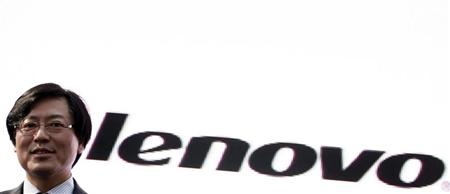
LAS VEGAS (Reuters) - China's Lenovo Group Ltd, on track to become the world's No.1 personal computer maker, is leveraging on what it calls the "PC plus" era as the company ramps up its plant capacity in major markets including the United States.
PC demand growth has waned over the past year as more consumers flock to ultraportable and increasingly powerful tablets and smartphones for basic computing. Hewlett Packard (HP), Dell and other stalwarts of the PC industry are now fighting to sustain growth as tablet computers eat into their PC-related businesses.
But PCs aren't disappearing anytime soon.
"We don't live in a post-PC world," Lenovo Chief Executive Yuanqing Yang said in an interview in Las Vegas on Wednesday. "We are entering the PC plus era."
Yang said it is a post-PC world for one group: companies that do not innovate in PCs.
"In our industry many players think PCs have become a commodity product," he said. "We have never thought this way."
Lenovo, he said, has redefined the category with products like Yoga, a laptop running Microsoft Corp's Windows 8 that can be converted to a tablet PC by flipping the screen all the way backwards, and Twist, another laptop that has a screen connected through a hinge.
The two laptops have had brisk sales in the United States with Lenovo capturing 40 percent consumer market share in the $900 and above category.
MARKET SHARE
Lenovo vaulted into the PC market by buying IBM's personal computer division in 2005. It has become a force through aggressive pricing, overseas acquisitions and taking advantage of a fast-growing home market.
Lenovo is lagging HP in PC shipments in the third quarter by less than half a percentage point, according to IDC, a consultancy. IDC placed HP at the No.1 spot with a 15.9 percent market share, marginally ahead of Lenovo's 15.7 percent share.
But Gartner, a rival to IDC, said Lenovo held the lead, with a 15.7 percent market share in the third quarter of 2012 compared to HP's 15.5 percent.
A year earlier, HP held a 17 percent market share while Lenovo held 13.1 percent, Gartner said. In the third quarter of 2010, Lenovo ranked fourth with 10.4 percent, trailing HP with 17.5 percent, Acer with 13.1 percent, and Dell with 12.2 percent.
"Now we are nurturing new areas including smartphones and tablets," Yang said. "We have focused on this change for many years. We have prepared for this trend."
DIVERSE WORKFORCE
One of the secrets of Lenovo's success, apart from its strategy, is its diverse workforce, Yang said. Its nine-person executive team represents six countries, he said.
The company wants a manufacturing footprint to match, with plans to increase the number of plants in most of its major markets. It is building a plant in the U.S.
It also plans to add more local products and local research and development.
"We want to be a global-local company," Yang said.
Last year, Lenovo bought Brazilian electronics maker CCE, and U.S. cloud computing firm Stoneware.
Lenovo, which is making a concerted global push into tablets and ultrabooks, does not expect to launch a smartphone in the U.S. until it has more U.S. brand recognition, said Gerry Smith, head of North American business for Lenovo.
The lucrative U.S. phone market is dominated by Apple Inc and Google Inc gadgets.
Lenovo launched a number of smartphone models, including the S890 with a 5-inch screen, at the Consumer Electronics show, for distribution in various markets.
In its biggest market by revenue, China, it has 15 percent of smartphone sales, according to Gartner.
(Reporting by Poornima Gupta and Bill Rigby; Editing by Ryan Woo)
2012-12-13
U.S. drops China's Taobao website from "notorious" list
U.S. drops China's Taobao website from "notorious" list
WASHINGTON (Reuters) - The United States on Thursday dropped a website owned by China's largest e-commerce company, Alibaba Group, from its annual list of the world's most "notorious markets" for sales of pirated and counterfeit goods.
Taobao Marketplace, an online shopping site similar to eBay and Amazon that brings together buyers and sellers, "has been removed from the 2012 List because it has undertaken notable efforts over the past year to work with rightholders directly or through their industry associations to clean up its site," the U.S. Trade Representative's office said in the report.
The move came just before an annual high-level U.S.-China trade meeting next week in Washington.
Taobao Marketplace is China's largest consumer-oriented e-commerce platform, with estimated market share of more than 70 percent. The website has nearly 500 million registered users, with more than 800 million product listings at any given time. Most of the users are in China, Hong Kong, Taiwan and Macao.
The U.S. Chamber of Commerce has called Taobao "one of the single largest online sources of counterfeits."
The Chinese Commerce Ministry strongly objected to Taobao's inclusion on the USTR's 2011 notorious markets list. A ministry spokesman said it did not appear to be based on any "conclusive evidence or detailed analysis.
Alibaba hired former USTR General Counsel James Mendenhall to help persuade USTR to remove Taobao from its list.
The Chinese company's bid to shed its "notorious" label won support from the Motion Picture Association of America, a former critic of Taobao, which praised its effort to reduce the availability of counterfeit goods on its website.
But U.S. software, clothing and shoe manufacturers urged USTR to keep Taobao on the list.
To stay off in the future, USTR urged "Taobao to further streamline procedures ... for taking down listings of counterfeit and pirated goods and to continue its efforts to work with and achieve a satisfactory outcome with U.S. rights holders and industry associations."
USTR said it also removed Chinese website Sogou from the notorious markets list, based on reports that it has made "notable efforts to work with rights holders to address the availability of infringing content on its site."
U.S. concerns about widespread piracy and counterfeiting of American goods in China are expected to be high on the agenda at next week's meeting in Washington of the U.S.-China Joint Commission on Commerce and Trade.
The 2012 notorious markets list includes Xunlei, which USTR described as a Chinese-based site that facilitates the downloading and distribution of pirated movies.
Baixe de Tudo, a website hosted in Sweden but targeted at the Brazilian market, was also put on the list along with the Chinese website Gougou.
Warez-bb, which USTR described as a hub for pre-release music, software and video games, was also included. The forum site is registered in Sweden but hosted by a Russian Internet service provider, USTR said.
The full report can be found on USTR's website at: http://www.ustr.gov/sites/default/files/121312%20Notorious%20Markets%20List.pdf
(Reporting by Doug Palmer; Editing by Will Dunham, Dan Grebler and Jim Marshall) Comm en
2012-11-15
Xi is the new leader of China
BEIJING (Reuters) - China's ruling Communist Party unveiled an older, conservative leadership line-up on Thursday that appears unlikely to take the drastic action needed to tackle pressing issues like social unrest, environmental degradation and corruption.
New party chief Xi Jinping, premier-in-waiting Li Keqiang and vice-premier in charge of economic affairs Wang Qishan, all named as expected to the elite decision-making Politburo Standing Committee, are considered cautious reformers. The other four members have the reputation of being conservative.
The line-up belied any hopes that Xi would usher in a leadership that would take bold steps to deal with slowing growth in the world's second-biggest economy, or begin to ease the Communist Party's iron grip on the most populous nation.
"We're not going to see any political reform because too many people in the system see it as a slippery slope to extinction," said David Shambaugh, director of the China Policy Program at George Washington University's Elliott School of International Affairs.
"They see it entirely through the prism of the Soviet Union, the Arab Spring and the Colour Revolutions in Central Asia, so they're not going to go there."
Vice-Premier Wang, the most reform-minded in the line-up, has been given the role of fighting widespread graft, identified by both Xi and outgoing President Hu Jintao as the biggest danger faced by the party and the state.
The run-up to the handover has been overshadowed by the party's biggest scandal in decades, with former high-flyer Bo Xilai sacked as party boss of southwestern Chongqing city after his wife was accused of murdering a British businessman.
Bo, who has not been seen in public since early this year, faces possible charges of corruption and abuse of power.
One source said an informal poll was held by over 200 voting members in the party's central committee to choose the seven members of the standing committee from among 10 candidates. Two of them who had strong reform credentials - Guangdong party boss Wang Yang and party organization head Li Yuanchao - failed to make it, along with the lone woman candidate Liu Yandong.
The source, who has ties to the leadership, told Reuters on condition of anonymity that Wang and Li Yuanchao, both allies of Hu, did not make it to the standing committee because party elders felt they were too liberal.
However, all three are in the 25-member Politburo, a group that ranks below the standing committee. It was earlier believed the voting was confined to the Politburo.
OLDER
In the end, the seven-member leadership has an average age of 63.4 years compared with 62.1 five years ago. Xi led the others out in a parade at the Great Hall of the People, with all seven dressed in identical dark blue suits, all but one set off by red or maroon ties.
The final line-up of the team and even the number was speculated on for weeks. The committee was cut to seven members from nine, which should ease consensus building and decision making.
Except for Xi and his deputy Li Keqiang, all the others in the standing committee - the innermost circle of power in China's authoritarian government - are 64 or above and will have to retire within five years, when the next party congress is held.
That means the party may just tread water on the most vital reforms until then, although after that, Xi would probably have more independence in choosing his team. The current line-up has been finalized by Xi and Hu, and by former president Jiang Zemin, who has wielded considerable influence in the party after the tumult over the Bo Xilai scandal.
Wang and Li Yuanchao could make it to the standing committee at the next party congress in 2017, perhaps along with so-called "sixth generation" leaders like Inner Mongolia party chief Hu Chunhua.
"The leadership is divided," said Jean-Pierre Cabestan, a Chinese politics expert at Hong Kong Baptist University, adding however that the new leadership would find it easier to make progress on economic reform rather than political change.
"It's easier for them to move to a new growth model. I think they agree upon that and that won't be the hardest task. But I see a lot of political paralysis."
Tony Saich, a China politics expert at Harvard's Kennedy School of Government, said: "To me it smacks of a holding pattern. I think the understanding is that Wang Yang has a good shot in five years' time."
"SEVERE CHALLENGES"
Besides party chief, Xi was also appointed head of the party's top military body, which gives him two of the three most important posts in the country. He will take over from Hu as president in March.
Jiang, who was Hu's predecessor, did not give up the military post until two years after giving up the party leadership.
Xi said in an address that he understood the people's desire for a better life but warned of severe challenges going forward.
"We are not complacent, and we will never rest on our laurels," he said after introducing the standing committee at the Great Hall of the People in a carefully choreographed ceremony carried live on state television.
"Under the new conditions, our party faces many severe challenges, and there are also many pressing problems within the party that need to be resolved, particularly corruption, being divorced from the people, going through formalities and bureaucracy caused by some party officials."
North Korean-trained economist Zhang Dejiang is expected to head the largely rubber-stamp parliament, while Shanghai party boss Yu Zhengsheng is likely to head parliament's advisory body, according to the order in which their names were announced.
Tianjin party chief Zhang Gaoli and Liu Yunshan, a conservative who has kept domestic media on a tight leash, make up the rest of the group. Zhang should become executive vice premier.
"Words from the new leadership will be reform-minded, but deeds would be very cautious at least in economic and financial restructuring," said Alberto Forchielli, managing partner at Mandarin Capital Partners in Shanghai.
Advocates of reform are pressing Xi to cut back the privileges of state-owned firms, make it easier for rural migrants to settle in cities, fix a fiscal system that encourages local governments to live off land expropriations and, above all, tether the powers of a state that they say risks suffocating growth and fanning discontent.
With growing public anger and unrest over everything from corruption to environmental degradation, there may also be cautious efforts to answer calls for more political reform, though nobody seriously expects a move towards full democracy.
The party could introduce experimental measures to broaden inner-party democracy - in other words, encouraging greater debate within the party -but stability remains a top concern and one-party rule will be safeguarded.
In contrast to the mounting excitement until the announcement of the standing committee at the Great Hall of the People, the unveiling barely caused a ripple in China's vast countryside.
"We're not really that interested," said Chen Yongjiang, a fruit and vegetable farmer in Chenjiapu, a snow-covered village in Hebei province.
"For those of us in the farmlands and the mountains, as long as they make life better for us, we're happy."
(Additional reporting by Benjamin K
2012-10-11
First domestic Chinese won Nobel Prize in literature
Mo Yan, after winning the 2012 Nobel Prizein Literature, is interviewed by the press in his hometown Gaomi, east China's Shandong Province, Oct. 11, 2012. Chinese writer Mo Yan has won the 2012 Nobel Prize in Literature, the Swedish Academy announced in Stockholm on Thursday.

Subscribe to:
Comments (Atom)